
A Week in Croatia, Designed from the Water Out
A six-day Croatia journey designed for eight friends: guided caving, private sea kayaking, island camping, and shared meals—planned to feel effortless, grounded, and deeply memorable.
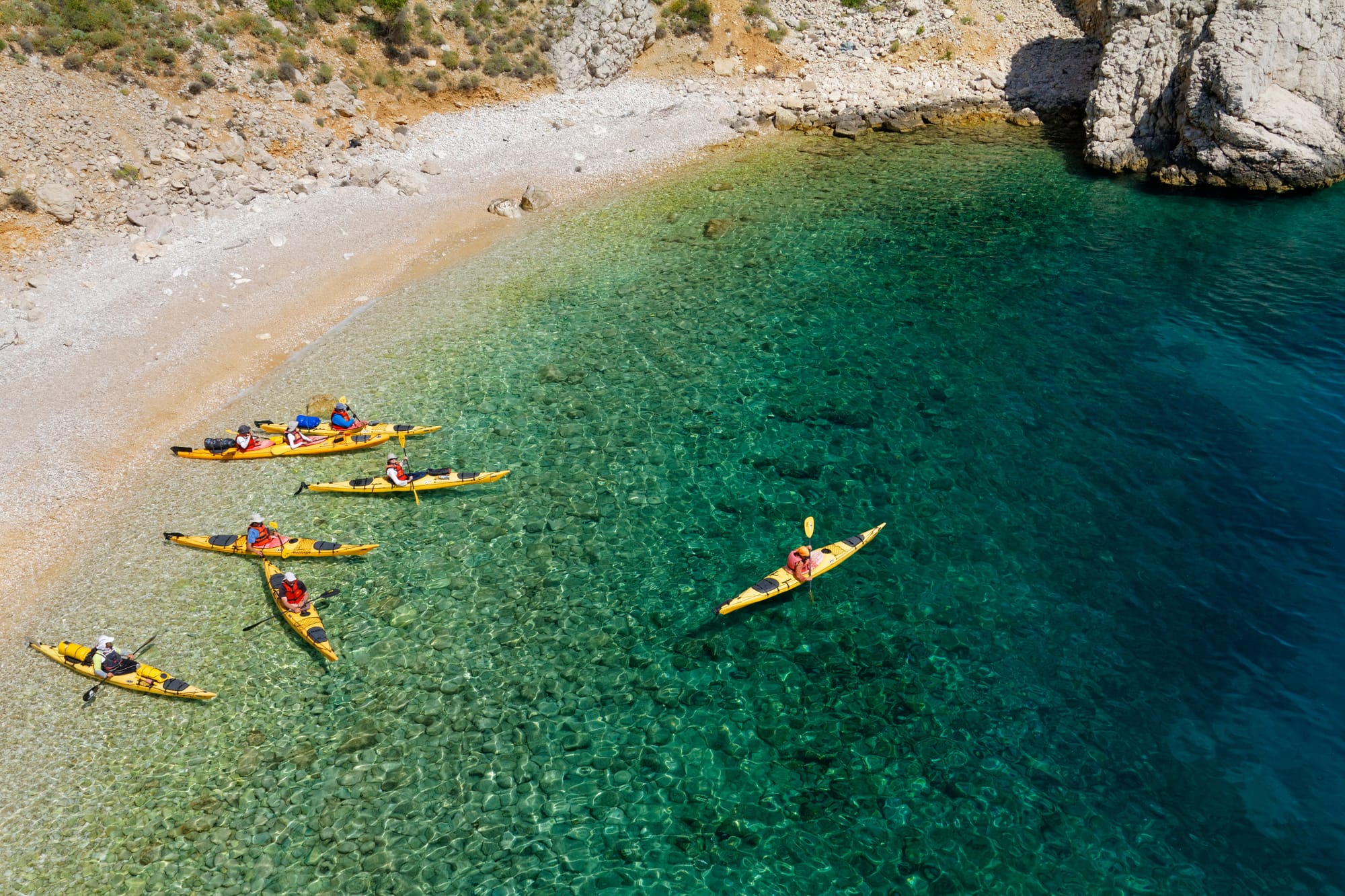
A group journey through caves, rivers, islands, and sea
By the second day, the group was already wet, muddy, and grinning.
Helmets went on in a gravel clearing near the base of the Velebit Mountains. Headlamps flicked on. The cave entrance swallowed daylight almost immediately, pulling everyone into cool darkness where the walls narrowed, the floor shifted underfoot, and voices echoed off raw stone.
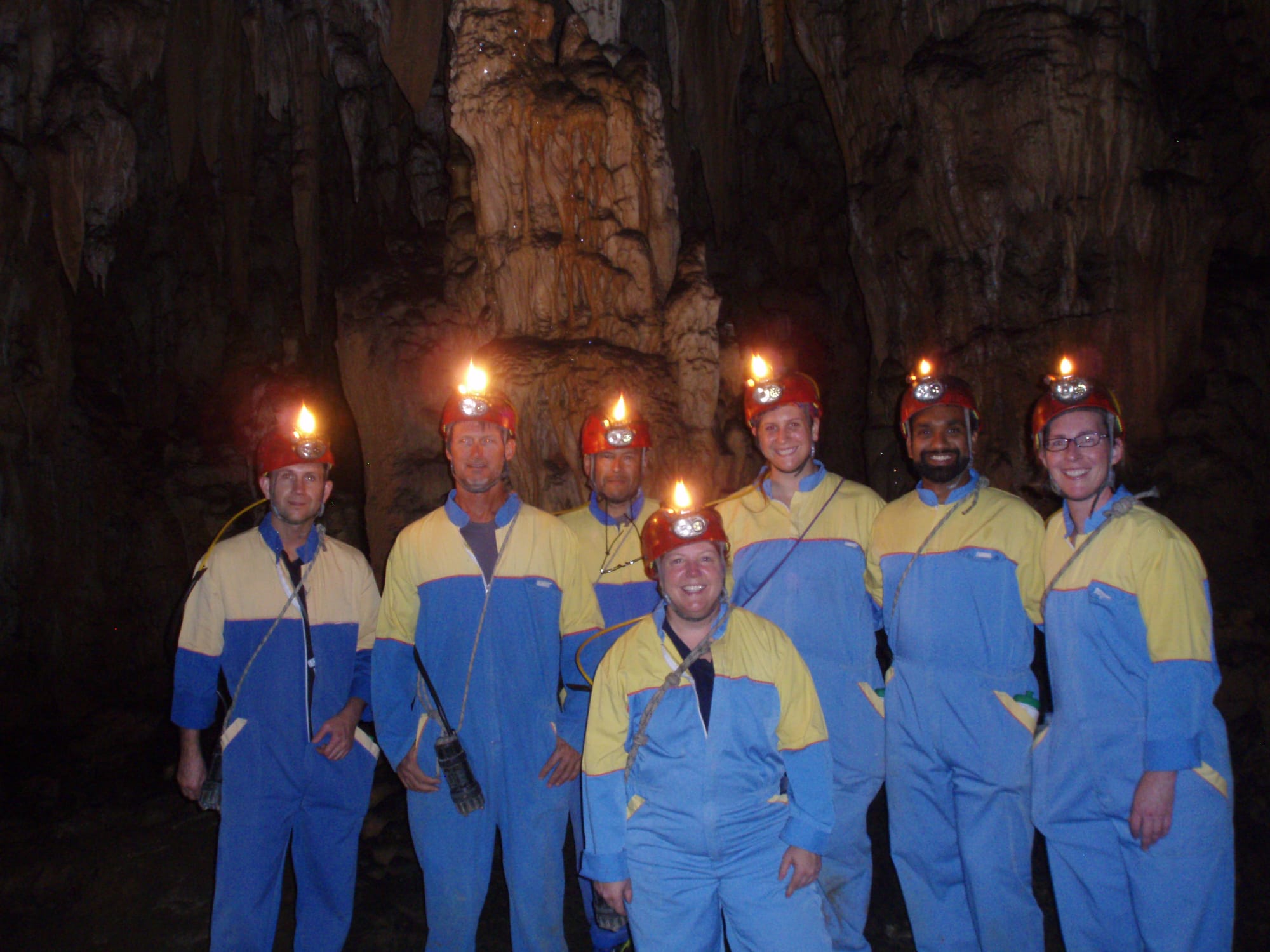
This caving experience was led by a local expert—someone who knew the cave system intimately and had explored it countless times before. There were no concrete paths or artificial lights. Everyone moved through the space as it existed naturally, equipped with protective suits, helmets, and headlamps. The presence of a knowledgeable local guide allowed the group to focus fully on the experience rather than the mechanics of navigating it.
Later that afternoon, inflatable kayaks slid into the Zrmanja River. The water twisted through limestone canyons in long, serpentine bends—sometimes calm and reflective, sometimes punctuated by small rapids that demanded attention without overwhelming the group. There were pauses to swim, moments of silence broken by laughter, and a final stretch that ended near a waterfall where everyone climbed out simply to stand and look.
Dinner that night stretched late. Stories overlapped. No one checked the time.
This was only the beginning.
Over the next six days, eight friends—ages 32 to 51—would move from river to sea, from mainland to island, from comfortable rooms to tents pitched on empty beaches. They would paddle beneath cliffs, enter sea caves directly from the water, sleep under stars, and end the trip gathered around a long table on a family terrace, eating grilled fish while the mountains faded into shadow.
It felt effortless. It wasn’t.
Arrival as orientation, not obligation
The group converged in Zadar from multiple countries using a mix of flights, buses, and cars. Arrival times ranged from early morning to late at night, spread across several days. Rather than forcing alignment immediately, the itinerary treated arrival as orientation rather than obligation.
Zadar served as a soft landing—walkable, scenic, and flexible enough to absorb staggered arrivals. There were no required activities on the first day. People explored independently, rested, or sat by the water until everyone had arrived. The first shared dinner marked the beginning of the trip, not the clock.
The following afternoon, the group departed inland toward Rovanjska, a small village near Paklenica National Park. The transition was subtle but intentional: from urban ease to quiet proximity with the landscapes that would shape the rest of the journey.
Parallel experiences, by design
One member of the group was a high-functioning quadriplegic and chose not to participate in the caving or kayaking portions of the trip. From the outset, the itinerary was designed so that opting out of specific activities did not mean opting out of the experience.
While some explored caves or paddled rivers, parallel experiences—scenic locations, relaxed meals, time spent near water or in nature—kept everyone equally connected to the rhythm of the trip. Participation was layered, not binary. No one was defined by what they did or didn’t do.
This approach removed pressure and allowed the group to stay cohesive without forcing uniformity.
From river to sea
Midway through the week, the journey shifted from inland waterways to open Adriatic water.
The sea kayaking portion of the trip was a custom, private experience designed specifically for this group and led by an experienced outfitter. Routes, distances, and daily pacing were adjusted based on group energy, conditions on the water, and the experience level of the paddlers.
Kayaks were launched from the beach near Lopar on Rab Island, where shallow turquoise water gradually deepened into open sea. Long, steady strokes replaced river currents. The horizon widened. The sense of exposure increased—but so did the feeling of freedom that comes from moving along a coastline under your own power.
Grgur Island: a different kind of immersion
From Lopar, the group crossed open water to Grgur Island, a stark and windswept place with a history that immediately changed the tone of the trip.
Grgur was once a political prison camp, and the guide treated it as such. Before tents were pitched or dinner discussed, the group was given context—who had been imprisoned there, how the island functioned, and what daily life would have meant in such an exposed and unforgiving place. The explanation was factual and restrained, but it carried weight.
That framing mattered. Movement on the island slowed. Voices lowered. What could have felt like a dramatic campsite instead became a place approached with quiet respect. Many in the group described the sensation as almost physical—as if the presence of those who had suffered there lingered in the air.
Dinner was simple. Conversation was thoughtful. The absence of distraction gave the island space to speak for itself.
In the morning, before breaking camp, the group walked the island together. Remains of the prison camp were still visible—low stone walls, foundations, fragments that hinted at structures meant to control and contain. The guide provided context sparingly. There was no need for embellishment.
The walk was unhurried. What had been abstract the night before became tangible in daylight. Leaving the island that morning felt deliberate. Kayaks were launched with a shared sense of having passed through something—not just geographically, but collectively.
For many, Grgur became the emotional pivot of the entire journey.
Sea kayaking the Geo-Park
The following days were shaped by sea kayaking along Rab’s Geo-Park, guided throughout by the outfitter leading the private trip. Their knowledge of the coastline—where to land, which caves could be entered safely, how conditions would shift throughout the day—made it possible to explore confidently without rushing.
Here, the scale changed again. Vertical cliffs rose directly from the water. Sea caves opened unexpectedly along the shoreline. The group entered these caves directly from their kayaks, navigating narrow openings where light shifted from harsh glare to deep blue shadow.
One highlight was Bear Cave, entered through an opening above the waterline. Kayaks waited offshore while swimmers dropped in, surfaced inside the cave, and exited through a low arch back into open sea.
Lunch breaks happened wherever the coast allowed—small beaches, flat rocks, quiet coves. Swimming, resting, and floating became as important as forward motion. The day ended on one of the island’s most isolated beaches, tents pitched beneath the island’s highest peak, dinner prepared as the sea went still.
Re-entry and celebration
The final day of paddling completed the Geo-Park circuit. Kayaks returned to shore in the afternoon, marking the end of the most physically demanding portion of the trip.
That evening, comfort returned by design. The group moved into private accommodations and gathered for a shared meal prepared at a family home. Fresh fish came off the grill. Local wine and schnapps flowed. The tone shifted from effort to reflection.
Departures over the following day were staggered. Some travelers left early for flights, others stayed longer or continued onward by land. Because the itinerary tapered rather than peaked at the end, these exits felt natural—an unwinding rather than an abrupt stop.
Why this itinerary worked
This trip succeeded because it was designed around people first and movement second.
Staggered arrivals were absorbed rather than resisted. High-effort days were balanced with recovery. Participation was flexible without fragmenting the group. Activities were guided by people with deep local knowledge, and the sea kayaking experience was custom-built for the group rather than pulled from a standard template.
For a group of friends in their 30s through 50s, this balance mattered. The result was a trip that felt immersive without being overwhelming—and memorable without being rushed.
Sample Itinerary Overview
| Day | Location | Focus |
|---|---|---|
| Day 1 | Zadar → Rovanjska | Arrival, orientation, group dinner |
| Day 2 | Paklenica / Zrmanja River | Guided caving, river kayaking, waterfall finish |
| Day 3 | Zadar → Rab → Grgur Island | Sea kayak launch, island crossing, camping |
| Day 4 | Rab Geo-Park | Sea kayaking, Bear Cave, cliffs and caves, beach camping |
| Day 5 | Rab Island | Final sea kayaking stretch, private accommodations, celebratory dinner |
| Day 6 | Zadar | Breakfast and departures |