
From Singapore to Northern Thailand: Designing a Slow Group Journey by Rail
This cross-border group journey moved by rail from Singapore through Malaysia to Thailand, blending strategic stops, cultural moments, and a gradual shift from city energy to mountain stillness.
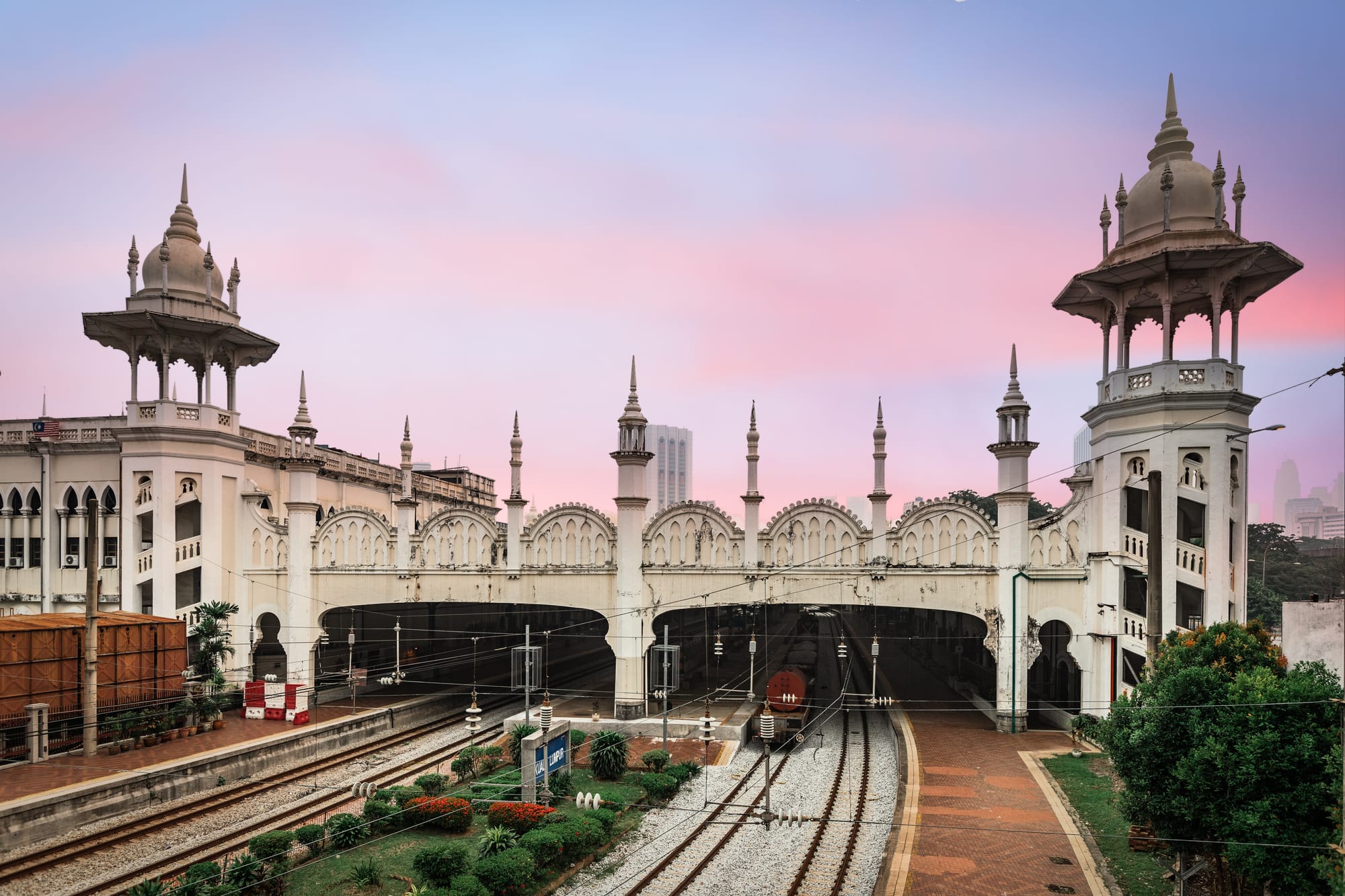
A group journey by rail from Singapore to the mountains of Northern Thailand
The journey began not with a transfer, but with momentum.
Singapore was loud, vertical, and electric—the kind of city that sharpens the senses whether you want it to or not. Hawker centers hummed late into the night. Streets glowed. Everyone arrived carrying the residual pace of their own lives.
Two days later, the group boarded a train and let the speed fall away.
What followed was a northbound journey stitched together by rail and road—moving from Singapore through Malaysia, into Thailand, up to Chiang Mai, and finally into the quiet foothills of Chiang Dao. The itinerary was designed so that each leg softened the pace just enough to make the next one land.
It felt fluid. It was carefully designed.
Setting the contrast in Singapore
Starting in Singapore was intentional. Its precision and density created a clear baseline—one that made every subsequent shift in rhythm more noticeable.
Arrival days were left open. Neighborhood walks replaced schedules. Meals stretched longer than planned. Conversations overlapped late into the evening. Singapore wasn’t treated as a checklist city; it was a calibration point.
When the group boarded the train north, they did so already synchronized.
Northbound through Malaysia
Rail travel through Malaysia changed the texture of the journey immediately. Movement became shared rather than fragmented. Palm plantations, small towns, and wide green stretches passed slowly beyond the windows, encouraging conversation and stillness in equal measure.
The first major pause came in Kuala Lumpur, where the group stayed for two nights.
Kuala Lumpur offered contrast without overload. Mornings were unhurried. Afternoons balanced exploration with rest. Evenings centered on food and long tables. This stop mattered: it broke the journey into chapters without breaking momentum. No one felt suspended in transit. The trip already had shape.
Crossing into Thailand
The transition into Thailand felt less like a border crossing and more like a release.
The group arrived in Bangkok and stayed for two nights—long enough to absorb the city without being consumed by it. Bangkok pulsed with energy, but the itinerary resisted compression.
One afternoon was reserved for recovery: a traditional Thai massage that recalibrated bodies after days of movement. The shift was immediate. Shoulders lowered. Pace softened. The group moved differently afterward.
Another evening unfolded into something quieter and more profound.
Loi Krathong in Ayutthaya
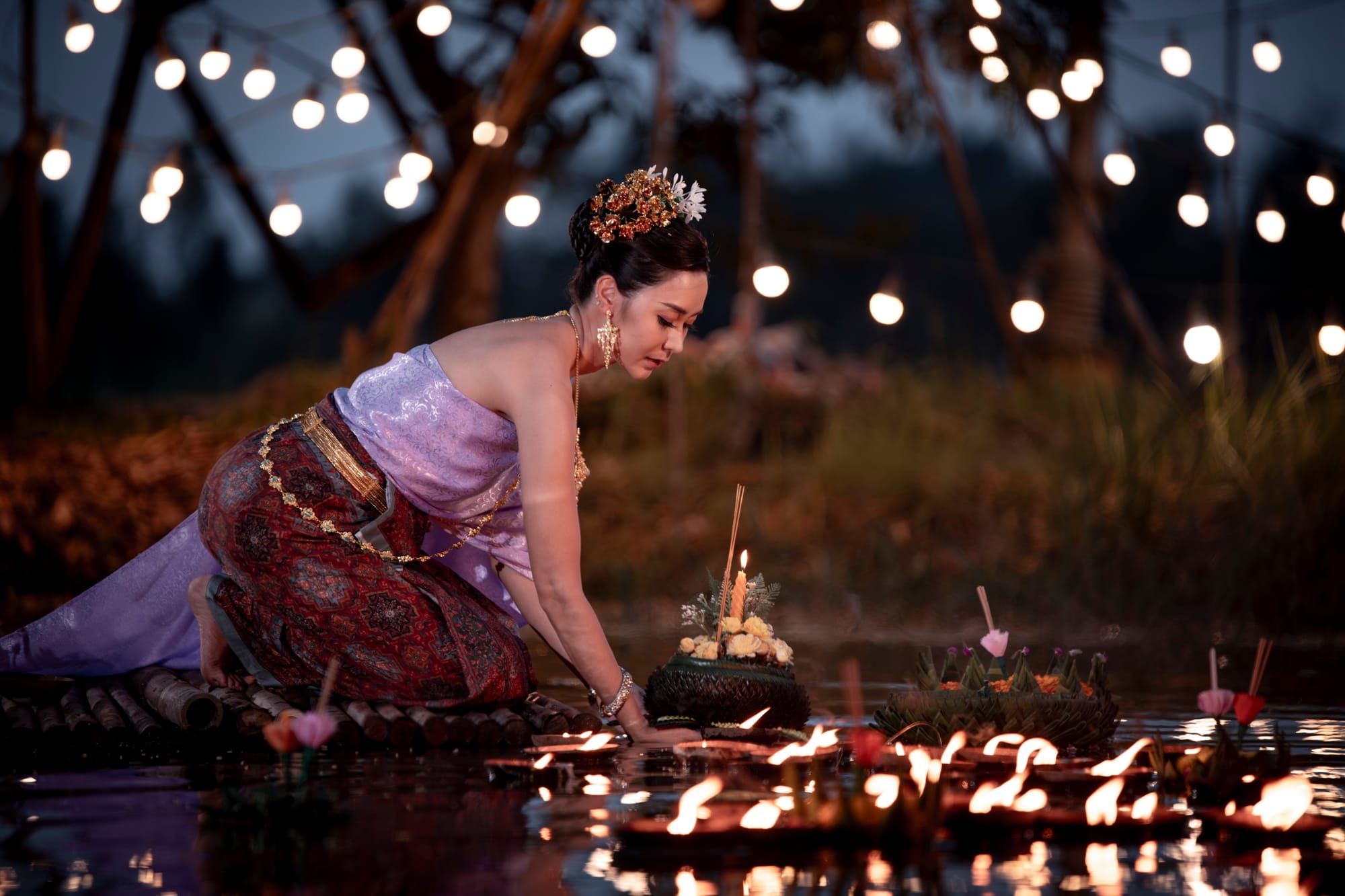
One night coincided with Loi Krathong, experienced at Ayutthaya Historical Park.
As dusk settled over the ancient ruins, the park transformed. Stone temples and weathered towers were lit softly from below, their silhouettes reflected in still water. Locals and visitors moved slowly across the grounds, many carrying small, decorative vessels shaped like lotus flowers—krathongs—crafted from banana leaves, flowers, incense, and a single candle.
The group spread blankets on the grass for a simple picnic, sharing food as the light faded and the air cooled. Children passed carefully with candles held in both hands. Conversations stayed low, as if the setting itself asked for restraint.
When the time came, krathongs were placed gently onto the water. Candlelight drifted outward in clusters, each vessel carrying a wish, a gratitude, or a letting go. Above, sky lanterns were released in waves—small points of light rising, pausing, then disappearing into the dark.
Light shimmered on the water. Light rose into the sky. History rested underfoot.
The evening felt communal without being loud, celebratory without being hurried. Long after the last lantern vanished, the glow lingered.
North by train again
From Bangkok, the group boarded another train—this time heading toward Chiang Mai.
This leg was about surrendering to duration. Reading. Watching the landscape shift as the air cooled and hills began to rise. Conversation ebbed and returned naturally. Train travel here wasn’t filler; it was connective tissue.
Chiang Mai welcomed the group for four nights, allowing space to settle rather than skim. Markets replaced malls. Cafés replaced transit hubs. One day included an elephant ride outside the city—handled with care rather than spectacle—offering awe paired with reflection.
Nothing felt rushed. It didn’t need to be.
Leaving the line
The final transition came quietly.
A bus carried the group north toward Chiang Dao. Roads narrowed. Traffic thinned. Mountains rose into view.
Chiang Dao was never intended as a climax. It was designed as a landing.
Days here were simple: morning light on limestone peaks, unhurried meals, walks without destinations. After days of shared movement, the stillness felt collective rather than empty.
Why this journey worked
This itinerary succeeded because movement was treated as part of the experience, not something to optimize away.
Key principles shaped the design:
- Gradual transitions rather than abrupt cultural jumps
- Rail travel as a shared social container
- Strategic stops that created chapters, not interruptions
- Recovery woven in alongside immersion
- A tapering finish that allowed the journey to settle
The result was a trip that felt cohesive despite crossing borders—and expansive without ever feeling rushed.
Sample Itinerary Overview
| Segment | Location | Nights | Focus |
|---|---|---|---|
| Days 1–2 | Singapore | 2 | Arrival, orientation, urban immersion |
| Days 3–4 | Kuala Lumpur | 2 | Rail journey, cultural transition |
| Days 5–6 | Bangkok | 2 | Thai massage, Ayutthaya, Loi Krathong |
| Days 7–10 | Chiang Mai | 4 | Northern Thailand, elephant experience |
| Days 11–13 | Chiang Dao | 3 | Mountains, stillness, re-entry |
This journey wasn’t about collecting destinations.
It was about following a line—northward, slower each day—until movement gave way to meaning.