
Walking in My Grandmother's Footsteps: My Experience with Research Travel
Census records told me where my grandmother lived. Walking the neighborhood told me what it meant. This is the story of researching a novel about my grandmother's life in 1930s Knoxville — and why I had to go there to write it.
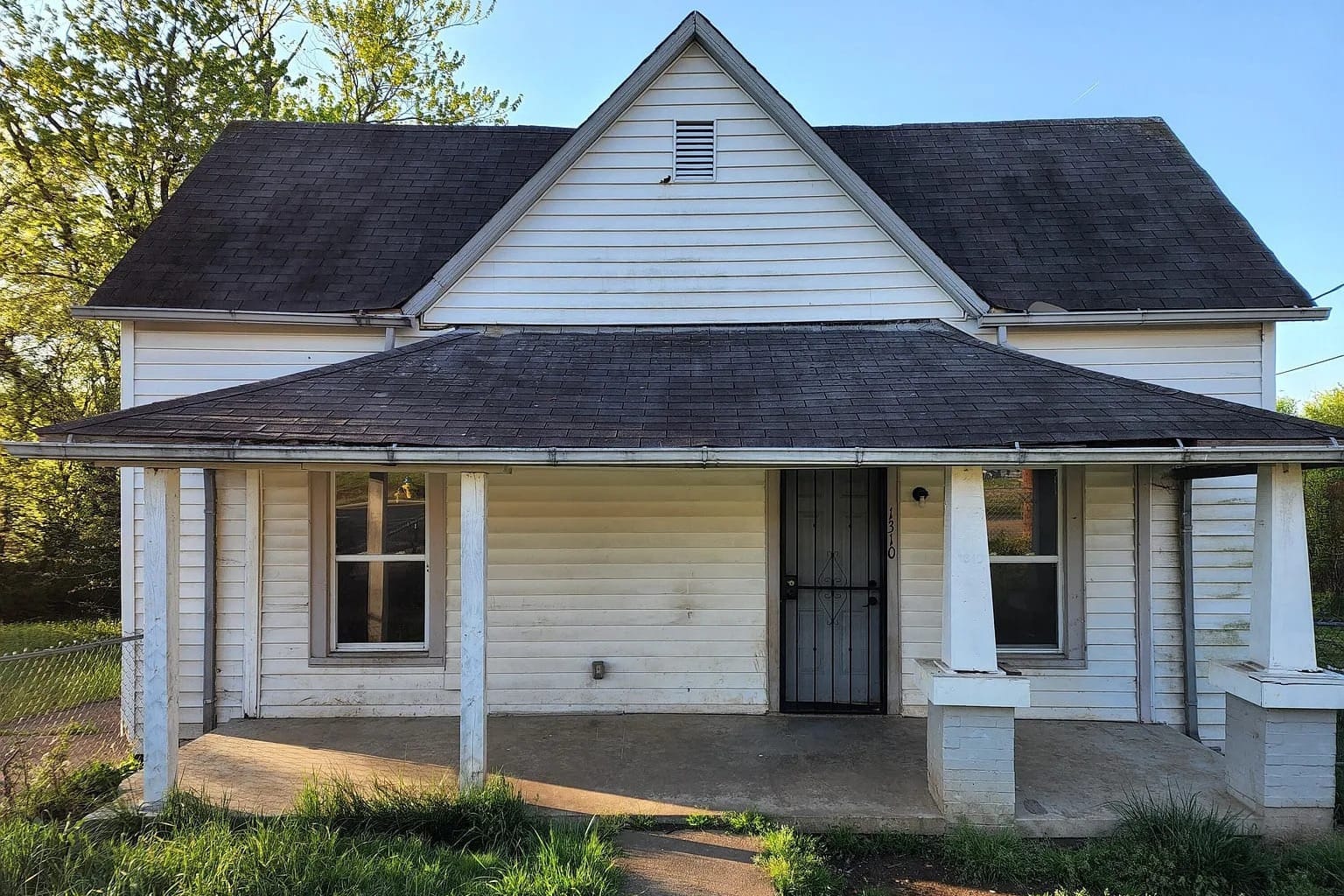
I was six years old the first time I visited my great-grandmother in Brookside.
I didn't know it was called Brookside then. I didn't know I was in a mill village, or that the small house with its odd layout had been built for textile workers decades before I was born. I didn't understand why the bedrooms opened into each other instead of into a hallway, or why tin cans were scattered around the yard.
What I remember is waking up in the middle of the night, scared, not knowing where my parents were. And this ancient woman — a virtual stranger to me — telling me I could come sleep with her.
For her, it must have been sweet: a chance to cuddle with a young child, a great-granddaughter she rarely saw. For me, it was frightening. I didn't know her. I didn't understand any of it — not the house, not the tin cans for snuff-spitting, not the metal glider on the front porch that I liked but couldn't have explained why.
She had moved to Knoxville from rural Cocke County as a young teenager, looking for work like so many families who left the mountains for the mills. She never left Brookside again. She lived there her entire adult life, and she died the year after that visit.
I've gone back many times since. But now I go as a writer, trying to see what I couldn't see as a child.
A Story That Lives in Places
I'm writing a novel about my grandmother, who grew up in Brookside during the 1930s through 1950s. Her father was a marble polisher in a city once known as the "Marble City." Her mother and siblings worked in the textile mills. She finished ninth grade at Rule High School, and then her father died in May, just after school let out. She never went back to school.
She lived to be ninety-nine years old. In between, she lived a life that spanned the Depression, World War II, the atomic age, and nearly into the present day. I knew her my whole life, but there was so much I didn't think to ask until it was too late.
Now I'm trying to understand her through the places she lived. Census records and family stories can only take you so far. At some point, you have to go there.
The Two-Mile Radius
Before my research trips, I created a Google map of every place I could document my grandmother living, working, and attending church. I traced her extended family too — they had migrated to Knoxville from North Carolina over the course of a decade, following each other to the mills.
The first revelation came from walking the Brookside neighborhood and looking at that map. Everything my grandmother needed — her housing, her work, her church, her entertainment — was within two miles. And when I looked at where her extended family lived, I realized almost all of them were within that same radius. Aunts, uncles, cousins, even her own grandfather. All of them, walking distance away.
This wasn't just a detail for my novel. This was the entire fabric of her existence. Mill village life meant knowing everyone, living in a web of family and neighbors so tight that privacy barely existed. The family members who lived farther away — in Hendersonville or Sweetwater or Clinton — must have felt like distant relations, even though they were close kin. I imagined holiday gatherings when everyone converged on Brookside, the ones who'd moved away hungry for that closeness again.
None of this came from documents. It came from walking the streets and feeling the distances in my own body.
Inside a Mill House
When I was six, I didn't know I was in a mill house. I only knew the bedrooms were strange, opening into each other, and that I was scared in the night.
Decades later, I had a chance to walk through another mill house — one that was for sale in the neighborhood. This time I knew what I was looking at.
The ceilings were high, built for airflow in a time before air conditioning. The rooms were small, and I could see how additions had been tacked on over time as families grew. The layout confirmed what I'd experienced as a child: bedrooms that connected through other bedrooms, a use of space that made sense for large families and made no sense for privacy.
And then there was the front porch.
The porch wasn't just architecture. It was the family's living room in warm weather, the place where you shelled beans and watched neighbors walk by and listened to the radio through the open windows. Standing on that porch, I could imagine my grandmother's family on a summer evening: her older sisters getting ready to head to Happy Holler for music, her brother grabbing his glove for a baseball game, her mother working in the kitchen, and my grandmother — still a girl — breaking green beans in the fading light.
That image now anchors an entire section of my novel. It came from standing on that porch and understanding what it meant.
Happy Holler After Dark
Country music was playing on the radio as I drove through North Knoxville — Kenny Chesney, as it happened, who was born and raised just outside the city. His mother and her twin sister both sang in the area, part of a musical legacy that runs deep in East Tennessee. And then I saw the sign: Happy Holler.
It was real. Not just a name my grandmother had mentioned, not just a phrase from old documents. Happy Holler was an actual place, with street signs and storefronts and a history you could walk through.
Established by the 1930s as the commercial center for Brookside and the surrounding industrial neighborhoods, Happy Holler had everything workers needed to spend their hard-earned wages: beer joints and dance halls and pool rooms, a movie theater called the Joy Theatre, and Cas Walker's grocery store.
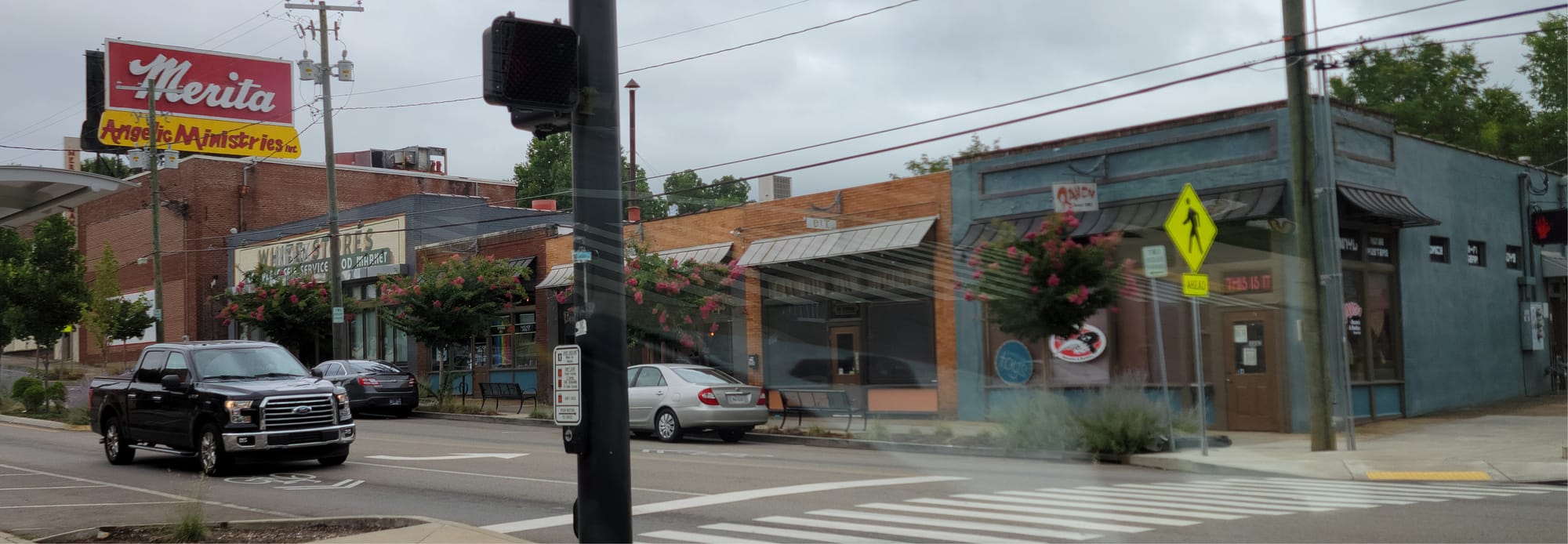
Cas Walker is an East Tennessee legend — the grocer and radio impresario who discovered Dolly Parton and Flatt & Scruggs before anyone else saw their potential. His "Farm and Home Hour" on radio station KNOX was essential programming, and I'd researched the station and the show extensively online. But standing in Happy Holler, I could imagine my grandmother's older sisters walking these streets after a long day at the mill, heading toward the music.
My grandmother knew Chet Atkins. She told me so herself, though we never talked about it enough before she died. Now I have to imagine those connections, fill in the gaps she left with what I know about the time and place. The Knoxville History Project — an invaluable online resource — helped me understand that Happy Holler was the kind of neighborhood where parents warned their daughters to stick to the back alleys rather than walk the main street after dark. It was rough and alive and full of music, and it was a short walk from my grandmother's front porch.
When I drove through at dusk, country music on the radio, I could see the old buildings and imagine what it must have been like when the streets were full of mill workers trying to eke out a little joy after long days in the factories. Kenny Chesney playing felt like the latest chapter in a story that started with those workers seeking music and light.
The Places That Shaped Her
Research travel isn't just about neighborhoods. It's about specific buildings that still stand, waiting to tell you something.
Rule High School is closed now, but the building still stands. I photographed it knowing that my grandmother walked through those doors every day until she was fourteen — until the month her father died and her education ended. The building can't tell me what she learned there or who her friends were, but it can show me the scale of the place, the windows she looked through, the steps she climbed. Those details matter when you're trying to bring a character to life on the page.
The Tennessee Theatre opened in 1928, and it's still magnificent — a movie palace from the era when going to the pictures was an event. I walked through imagining my grandmother as a young girl, first with her sisters, then with friends, eventually on a first date. The ornate ceilings, the grand scale, the sense of wonder that must have felt almost otherworldly to a mill worker's daughter — I needed to see it to write it.
Chilhowee Park and the Expo Center has hosted the Tennessee Valley Fair since 1916, so I know my grandmother attended. There was also a small amusement park there, and here's a detail that will appear in my novel: during Jim Crow, the park was whites only — except for August 8th, which was celebrated as Emancipation Day in East Tennessee. These layers of history exist in places, waiting for you to find them.
The L&N Station gave me a vision for what train travel looked like in that era. My grandmother traveled by train between Knoxville and Hendersonville, North Carolina, to visit relatives on her father's side. I've researched the timetables extensively — the routes, the stops, the small towns along the way. But the station itself showed me the architecture of departure and arrival, the weight of those journeys.
The Marble Connection
My grandmother's father was a marble polisher, and Knoxville was once known as the "Marble City." Tennessee pink marble and blue limestone built some of the most beautiful structures in the region, and I went looking for examples.
I found them at the East Tennessee History Center, in the exterior of the Knoxville Post Office, and at the historic Ramsey House. But I also did extensive research on the marble industry itself — the different jobs in marble working, the pay scales, the major employers. The History Center's exhibits helped me understand what his daily work would have looked like, the skill involved, the physical toll it took.
Standing in front of buildings made from the material he spent his life polishing connected me to him in a way that documents never could. He died when my grandmother was fourteen, leaving the family in poverty. I never knew him, obviously. But I've touched the stone he shaped.
Dams and Distance: The TVA Connection
When I was twelve, my family spent a week at Big Ridge State Park. I remember standing at the edge of the lake and imagining what had been there before — the farms and homesteads that were flooded when they built Norris Dam, the lives that were displaced so the Tennessee Valley Authority could bring electricity to rural Appalachia.
I didn't know then how that history would connect to my grandmother's story.
The TVA changed everything in East Tennessee. Norris Dam, completed in 1936, was the first dam built by the Authority, and it transformed the region. The electricity it generated powered new industries, new possibilities — and eventually, during World War II, it powered Oak Ridge.
My grandfather — my grandmother's husband, who was from Commerce, Georgia — worked putting up electrical lines from the dam to Oak Ridge during the war years. He was part of the vast, secret effort to build the facilities for the Manhattan Project.
And in an odd twist of connection, I worked at Oak Ridge myself in my early twenties. Three generations, all touched by that history. My great-grandmother in her mill house in Brookside, never leaving the neighborhood she'd adopted as a teenager. My grandfather stringing electrical lines through the hills. Me, decades later, working in the same place those lines had been built to serve.
Research travel helps you see these connections. Standing at Big Ridge, I wasn't just remembering a childhood vacation. I was seeing the landscape my grandfather worked in, the valleys that were flooded, the world that was transformed. It's all part of the same story.
The Cemetery
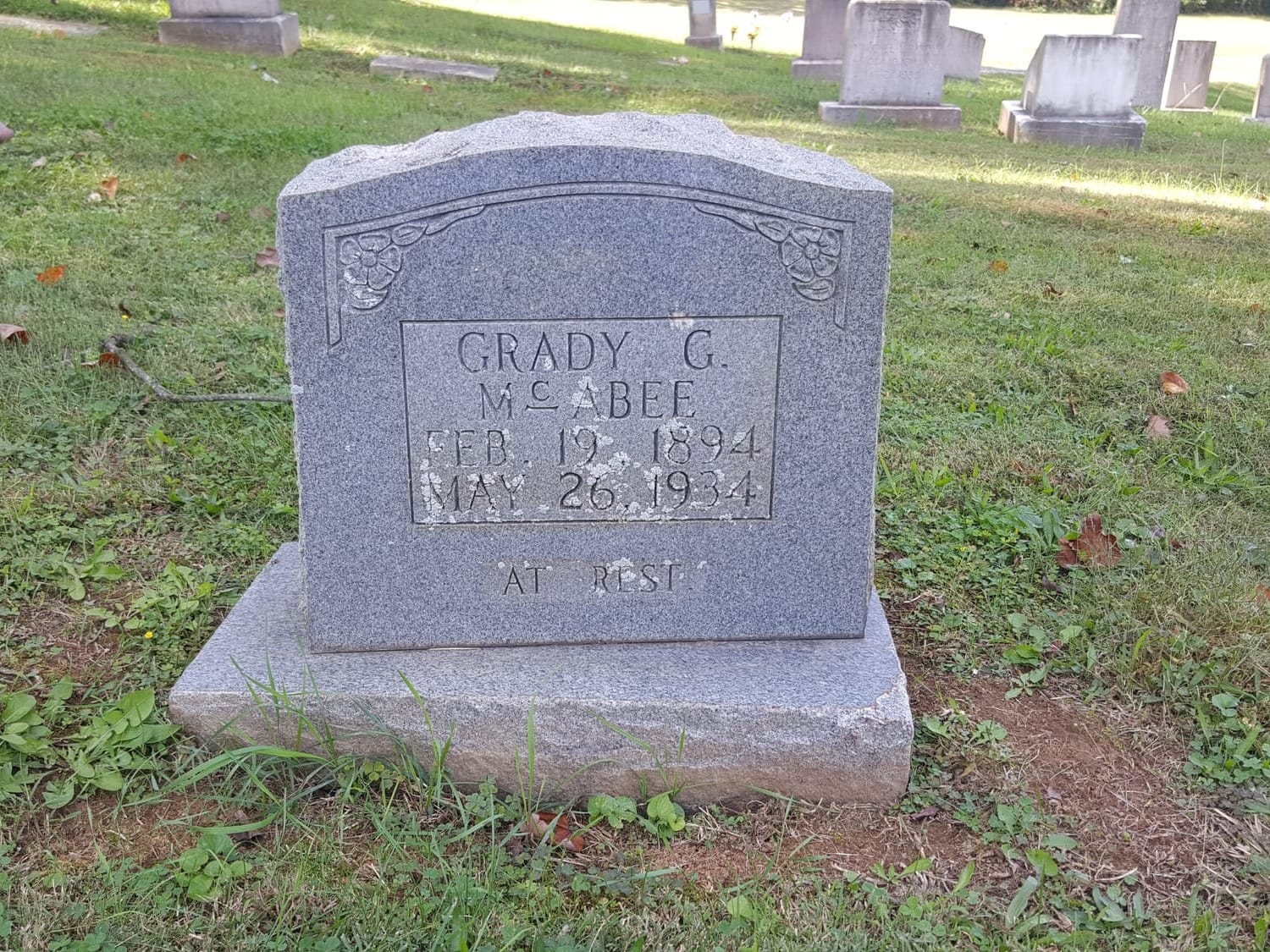
I went to cemeteries looking for specific graves, and I found them — my great-grandmother, my grandmother's father, other relatives whose names I knew from census records.
What I didn't expect was how much the gravestones themselves would teach me. I'd already researched funeral costs in the 1930s, so I knew what families could and couldn't afford. But seeing the actual markers from that era — their size, their condition, their inscriptions — showed me what grief looked like when money was scarce. The modest stones spoke as loudly as any document about the economic realities of mill village life.
Cemeteries remind you that the people you're researching were real. They lived and died and were mourned. Standing at those graves made the gaps in what I know feel larger, but it also made my commitment to telling this story feel more urgent.
The Unexpected Discovery
Research travel delivers surprises you can't plan for.
I had lived in Hendersonville, North Carolina, for six months, researching the area my grandmother visited as a girl. Her father's family was from there, and she traveled by train to see relatives and experience Cherokee arts and crafts — she was distantly related to the Cherokee. I visited Chimney Rock, walked downtown Hendersonville, took notes from Foxfire books about traditional carving and handwork.
And then I saw it: McAbee Fruit Stand.
McAbee was my grandmother's maiden name. The only McAbees I'd ever known were relatives. I hadn't expected to find the name on a business sign in Hendersonville, and I don't know for certain if there's a family connection. But the shock of recognition, the sudden sense of pride and belonging — that's something research travel gives you. The feeling that you're not just visiting a place. You're finding threads you didn't know existed.
What's Still Ahead
Research travel is never really finished. Even now, with my novel close to complete, there are journeys I still need to make.
I haven't yet ridden the train route between Knoxville and Hendersonville. The passenger service my grandmother would have taken no longer exists in the same form, but I can still travel that corridor and see what she saw: the rivers and mountains, the icy cold streams with huge boulders, the mountain laurel blooming in spring, the deep darkness of the forest. I think that train route mattered to her — it connected her to her father's family, traced the path of migration so many Appalachian families followed, and passed through some of the most beautiful landscape in the South.
I also haven't done a proper research trip to Commerce, Georgia, where my grandfather grew up. I visited briefly with my grandmother when she was still living, but I want to spend real time there. I want to understand what it must have been like for her — a young woman who had never lived more than two miles from her extended family — to move to rural Georgia with a husband she barely knew. All those aunts and uncles and cousins, suddenly hundreds of miles away. I want to feel that isolation so I can write it.
The Tension: When to Stop Researching and Start Writing
Here's the truth every writer doing research travel has to face: you can always find one more thing. One more trip. One more archive. One more detail that might change everything.
At some point, you have to stop gathering and start writing.
I've mostly made peace with this. If I never make it to Commerce, I could still finish this novel. The train trip feels more essential — it's the final piece I need. But I've learned to recognize when research becomes procrastination, when the hunger for more information is really fear of committing words to the page.
My grandmother's brother Herschel is a character in this book — a man involved in liquor stores and gambling and local politics, the kind of larger-than-life figure who deserves his own novel. And he'll get one, which means more research ahead. I visited the Prohibition Museum in Savannah, Georgia, to understand the era of bootlegging and moonshine that shaped his world — the liquor that ran through Knoxville on its way to Atlanta. That was a single afternoon on a trip I was already taking, and it opened up a whole new dimension of the story.
But for this book, for my grandmother's story, I have what I need. The rest is imagination, which is what fiction ultimately requires.
Research Travel Doesn't Require a Passport
One thing I want other writers and family historians to understand: research travel doesn't have to mean international trips or exotic locations. My most valuable research happened within a few hours of where I live. Day trips. A long weekend in Knoxville. Time spent in Hendersonville when I was there for other reasons.
Research travel is about showing up. Walking the streets. Going inside the buildings that still stand. Finding the cemeteries and the theaters and the fruit stands. Letting places tell you what documents can't.
My grandmother lived to be ninety-nine years old. She had a whole life I'm only beginning to understand — and I knew her my entire life. I sat on her couch, ate her cooking, heard her voice. But I didn't ask the right questions until it was too late.
Now I'm asking the questions in the only way I can: by going to the places she lived and letting them speak.
For Writers and Family Historians Alike
I started this journey as a novelist researching a setting. But I've come to realize that what I'm doing is the same work family historians do: trying to understand people who are gone by visiting the places that shaped them.
When I was six years old, standing in that mill house in Brookside, I didn't know I was standing in my grandmother's history. I just knew I was scared and confused and far from home. Now I understand that I was home — a home I didn't recognize, built by people whose lives I'm only now beginning to piece together.
If you're writing a novel set in a real place, research travel will make your work richer and more authentic. If you're tracing your family history, standing where your ancestors stood will connect you to them in ways that records never can. And if you're doing both at once — as I am — you'll find that the line between research and pilgrimage gets blurry fast.
Either way, the investment is worth it.
If you're working on a project that demands this kind of on-the-ground research — whether it's a novel, a memoir, or a family history that's calling you to visit the places your people came from — I'd love to help you plan it. Research travel can feel overwhelming when you're staring at a map full of possibilities. Sometimes you just need someone who understands what you're looking for and can help you find it. Schedule a consultation and let's talk about where your story needs to take you.